IC XC
✙
NI KA
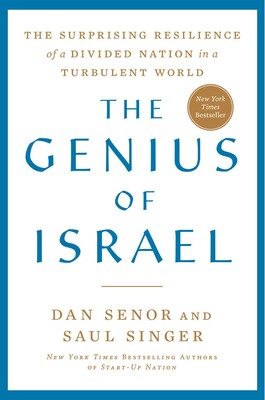
Listening to Kan English news has become a morning habit. I wake up at 4:30 AM in San Francisco, thirty mins after the 2:00 PM newscast is sent out from Israel. After Morning Prayers, during coffee, I have time to listen to Naomi Segal or Arieh O’Sullivan fill me in on what’s happening in the Knesset, or in the street protests. From October 7 forward it’s been a way to keep up on the war, struggling to begin the day hearing bad news – and then taking that internally as something happening to people I love. Last week when I heard Mark Weiss speak with Saul Singer about his new book, The Genius of Israel: The Surprising Resilience of a Divided Nation in a Turbulent World, I was interested on two points of connection. As I mentioned in an earlier post, Israel is way not perfect but it is the kind of western democracy I wished I lived in – rather than the one that we have here. I had no logical reasons for that to be the case – just a gut feeling. The book opens with a description of the protests and describes this scene from 23 July 2023:
The second reason I wanted to read the book was something that he said in the interview. The book was written over ’22 and early ’23. It was printed before the horrors of October, השבת השחורה or the Black Sabbath. It was nearly prophetic in explaining what I saw in real life: why did successful business people and students earning advanced degrees drop everything and fly home to join the IDF? What was this pull? What was going on? The authors explain it all. I purchased the book on Friday (as a file from Audible.com) and listened to it for several hours on Saturday as I did my chores. When I mentioned it to my Hebrew teacher on Monday morning he was amazed because he had only just finished the same audiobook as a suggestion from another of his students.
There is a preview available on Google Books and it can be had on Kindle and also Audible, as I mentioned. It’s an easy listen, not too many words in Hebrew at all and the ones that are are explained clearly for American audiences. It focuses on cultural aspects that may come as a surprise to Americans. I’m not sure we have any cultural slot in which to file compulsory military service such as is required in Israel. In my head it’s always been linked with “the Draft” and even Viet Nam. Listening to this book a new image developed: of military life as a path of formation – one which forms the youth into the adult, one which makes a full fledged person out of the whiney brat. But then I learned that even education in Israel is doing this – they worry about formation even in their grade schools. They are trying to form persons within the community of Israel. I began to understand sub-text in my Israeli TV shows and YouTube channels.
No… this is not a college level textbook in the sociology of modern Israel. But it’s more like a code book. It helps one understand what one is seeing – and experiencing.
When I was in college, I took Hebrew. The NYU course was led by a former journalist from Israel. She had worked at Ha’Aretz (I think?), although she and her family were living at that point (1983) in New Jersey. I was the only Gentile in the class – in four classes, actually. She and the TA took a special interest in me, making sure that I was never behind, always comfortable, included at all costs. In the Spring Semester, she asked me to present a paper to the four classes on the celebration of Easter. I stumbled through the writing… and she helped me. I stumbled through the reading out loud of the paper, and everyone in the room was encouraging. In the summer, the TA asked me to substitute teach for him at a Children’s Hebrew School on Roosevelt Island. I don’t mention that to brag – except about my excellent teachers and how hard they worked to bring me in.
I understood this as I listened to Chapter 12 on “Second Chances”. This chapter is about how the IDF will bend over backwards to bring each “draftee” to their fullest potential. This, coupled with the educational system’s desire to have “Gibush”…
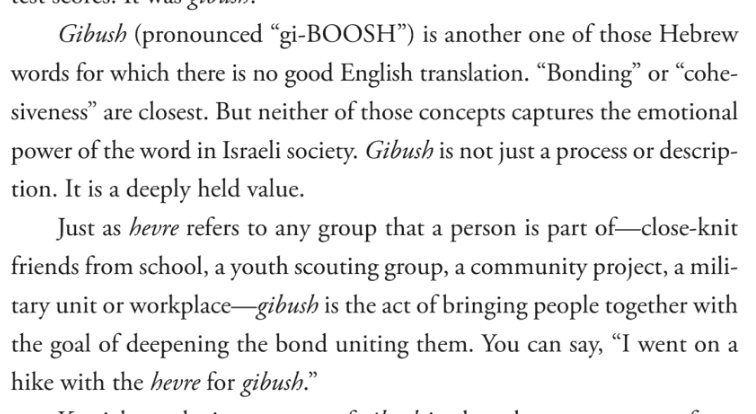
This is why I felt so included when I was so much on the outside. And this is why – 30+ years after my educational experience at NYU – so much Hebrew was still in my brain that I had to back to school to bring it all beck together. Duolingo has an interesting point of view:

Sed Contra:

This book is really worth reading. Or listening to. The author is not sure what might happen after the war – but there’s been this growing sense of doom among American watchers… that I don’t share now. I’m not sure what’s happening or what will happen. But there’s a contagious optimism in this book that I’ve heard expressed in my current Hebrew classes as well. The heart can break from the news, but this book is a balm.
There’s hope of what will come in the future as well.
 Orthoparadoxy
You must be logged in to post a comment.