
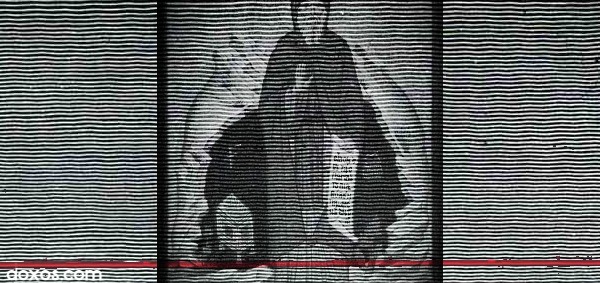
IC XC
✙
NI KA
To grossly paraphrase Caesar (and to ruin Latin), coenobita est omnes divisa in partes tres. All monasticism is divided into three parts: East and West, with the latter being further divided into those living either the active or contemplative life. Contemplative monastics – male and female – are hidden away in a cloister. They pray a lot. Active folks have things to do – schools, hospitals, etc.
St Anthony the great, whose feast day was recently, was one of the founders of Monasticism in the Christian Church. His tradition was planted in the arid wastes of the Sinai and Egyptian deserts, and it still flourishes there. The monks, though, were given to extremes: fasting for long – what we would call unhealthy – periods of time and performing other “monastic feats” as they were called. When, at my monastery, I studied this portion of monkish history I said to Father Abbot, it seems rather like “American Ninja Warrior”. This perception was shared by others at the time, and reform began. First drawing the hermits into communities – this was St Anthony’s great work – and then giving some structure – this was St Pachomius’ Rule (that’s a PDF link), the first of it’s kind. Later, the Rules of St Basil of Caesarea in the East and St Benedict of Norcia in the West would create greater structure.
The western model was usually a community at remove from others. Benedict envisioned monks never leaving their monastery, even growing all their food in the property. In the east, though, St Basil wanted his monks to be doing work for others and so communities that followed his rule were often near or even in cities. The most famous of these urban communities being the Studite monastery in Constantinople. Among other things, they started the first hospital, to care for the sick and the urban poor. Western monks, as I noted, tended to be isolated from folks. Several curious twists of history have left both East and West thinking monks need to be hidden away. Friars on the other hand, in the west, tend to be moving through the world and doing things, like the first monks of St Basil. This is the Western division between “active” and “contemplative” monasticism.
In the East – or, at least, in the Orthodox world in western culture – the monastics continue to be isolated. They are all contemplative. None of them are building monastic hospitals now. And the entire “monastic republic” of Mt Athos is entirely isolated from the rest of the world. But they also have the ideas of the acitve and contemplative life, but they are used to different ends and they are not over and against each other so much as paired in a dance. The “active” life is the struggle against the passions – the life of repentance. The “contemplative” life is the inner life a monk seeks to cultivate: the growing relationship he has with God. St Anthony thought that getting away from the world would best help him in this. Basil thought that living in community in the world would do this. Both of them thought that the best way to do it was in a focused, structured community of support that would force one to – at the same time – actively repent and contemplatively be open to God reaching into the heart.
This second pattern, the eastern one, leave us with a bit of a conundrum. The Western idea sets up an archetype that gets repeated over and over: in the monastics as described, in the clergy (“religious” versus “secular” clergy), and in the whole church: the laity are active, the clergy are contemplative. Especially the latter is seen in the documents of Vatican II, where the laity are focused outward on the world, while the clergy are to support the laity in “evangelizing the culture” and “reading the signs of the times.” The eastern conundrum, however, is that if the monastics are always active and contemplative at the same time, then so are all the clergy and, thus, so is the entire Church. Who, then, is to be “evangelizing the culture” and “reading the signs of the times”?
The answer is, literally, no one.
The inward focus in the Eastern Church results in a Charismatic constitution to the Church: there is no one focused on the world but God. When God needs something done he will move the Church to do something. Like setting up hospitals or Schools. Generally, that is to be left to the civil and secular authorities. They have their jobs to do. The Church has hers – and that is saving souls, not the world. She does this by drawing herself – and others – into deeper communion with God, rooting out all vices, and repenting continually, of the sins in which we live.
So, this “action and contemplation” is an interesting meditation to bring to “Catholic Social Teaching”. The West has her on-going fascination with Marxism and “liberation theology” while the East has a history of Communist persecution and only seeks “liberation” from sin. Both east and west agree that there can be oppressive, sinful structures in human society, but they disagree on what to do about them. A good number of Christians in the west are happy to work to overturn those systems without any evangelical content. In the east the view is to evangelize the people – and that will overthrow the oppression in God’s time.
Although I think it’s possible to hold these two ideas in tension it seems very important to recognize that there is, exactly, an opposition and a tension: and not one that can be reconciled. It’s not a case of some get to be active and others contemplative. Active is not “in the world” while contemplative is “in the Church”. Breathing with both lungs (to use St John Paul’s imagery) seems to mean not a reunification of east and west but rather of active and contemplative. We are all called to live a life that is both active and contemplative, both directed towards the acquisition of virtue and the growth of a deeper relationship with God.
 Orthoparadoxy
You must be logged in to post a comment.