IC XC
✙
NI KA
Readings for Memorial of St Ignatius of Loyola
17th Monday After Pentecost
A day late, but I keep rewriting…
- Exodus 32:15-24, 30-34
- Psalm 106 (Response: Give thanks to the Lord, for he is good)
- James 1:18 (Alleluia)
- Matthew 13:31-35
Only the one who has sinned against me will I blot out of my book.
Exodus 32:33
WHY DID GOD MAKE ME? It’s the first thing the Baltimore Catechism offers us. God made me to know Him, love Him, and serve Him in this life, and be happy with Him in the next. Know Him, love Him, and serve Him. The new Catechism gives us the same thing, but with more context in ¶355 ff, telling us in ¶358 “God created everything for man, but man in turn was created to serve and love God and to offer all creation back to him.” The claim made here, obliquely, is that God is what Aquinas would call, a Final Cause. We’re not used to thinking this way. We’re stuck in time: any “cause” must precede the “effects”. But that’s not a Christian way of thinking at all. God is omnipresent both in our past and in our future (as well as our present). God is the only cause of all that is. We may be caused by our parents and by our environment, but we are created for a purpose and the purpose is as responsible for our existence as our parents. We are created to to know and love God, to serve him and be happy with him. The purpose for our existences causes our existences to be. This is so very true that to swerve away from our final cause is – in some very real ways – to cease our existence. We die (cease to be) with every sin, with every departure from knowing, loving, and serving God. This is the “intrinsic disorder” of which the Scholastics speak. Conversely, we live more, or have more life when we are properly ordered to our final cause. “Properly ordered” is opposite of “intrinsically disordered”. God made me to live in, for, and with him. If I sin I step out of that plan and die.
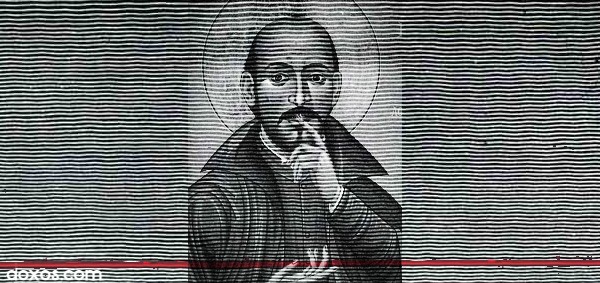
Today’s Saint, Ignatius of Loyola, is known for his spiritual exercises. They are predicated on the following assumptions (which begin at the same point as the Catechism):
Man is created to praise, reverence, and serve God our Lord, and by this means to save his soul. And the other things on the face of the earth are created for man and that they may help him in prosecuting the end for which he is created. From this it follows that man is to use them as much as they help him on to his end, and ought to rid himself of them so far as they hinder him as to it. For this it is necessary to make ourselves indifferent to all created things in all that is allowed to the choice of our free will and is not prohibited to it; so that, on our part, we want not health rather than sickness, riches rather than poverty, honor rather than dishonor, long rather than short life, and so in all the rest; desiring and choosing only what is most conducive for us to the end for which we are created.
Source
In short, St Ignatius teaches that everything should be evaluated on the one razor-sharp division: will this help me be saved? If the answer is yes, then proceed. If the answer is no, then rejected it. We must desire and choose “only what is most conducive for us to the end for which we are created.”
What must it be like to act in such a way – as if nothing other than that one thing matters save “to praise, reverence, and serve God our Lord” – and to live all of life on that question?
The author is surrounded by much evidence of failure on that very point. Shopping, history, consumption… it always seems to be easy to get me to buy something. This is kinda cool. So is that. I’m happy I own both. But am I being saved? I just needed some coffee and I’m tempted to overhear a conversation in the next room. Which may totally mesh with my religious nerdery. But am I being saved? I need to rest more tonight and I have to practice my Hebrew on Duolingo before I miss my 400+ day streak. But with that get me into heaven faster/easier? This conversation about the Vice President, is it conducive to my spiritual health? That BBC story about sexual abuse, is it something I need to hear for my salvation?
We share this laser-focus of all life to God with others in Second Temple Judaism. The Sayings of the Fathers (Pirkei Avot) are replete with admonitions of this sort. But other religions have this as well – mindfulness. For Catholics, this is called the practice of Recollection:
Recollection, as understood in respect to the spiritual life, means attention to the presence of God in the soul. It includes the withdrawal of the mind from external and earthly affairs in order to attend to God and Divine things. It is the same as interior solitude in which the soul is alone with God.
Certainly we can vary the intensity – it’s easier to be recollected on the Subway than on the morning drive – but for everyone at every moment, there must be some degree of recollection. Consider marriage: you are never not-married. You can’t even pretend to be not-married. That’s literally getting ready for adultery. To intend to be not-recollected… is to prepare for sin. To deny your final cause is to die a little and to enter an equal amount into hell.
 Orthoparadoxy
You must be logged in to post a comment.